Almost every Indian family wants a dedicated space for prayer, but in a compact flat there is rarely a separate pooja room. The good news is you do not need one. With smart planning, even a small wall or corner can become a beautiful, peaceful mandir. Here are practical pooja room design for flats ideas that save space and still feel special, the same ones we use for homes across Greater Noida West.
Why a dedicated space still matters
You might wonder if a fixed mandir is even needed when you can simply place idols on any shelf. In practice, a proper dedicated spot makes daily prayer feel calmer and more meaningful, keeps the idols safe from dust and kitchen smoke, and gives the home a small corner of peace that everyone respects. It also keeps pooja items in one organised place instead of scattered around the house. Even in the smallest flat, carving out a thoughtful little prayer space is one of the most personal and satisfying parts of doing up your home.
First, the right direction
As per vastu, the north-east corner of the home is the most auspicious place for your mandir. Position the idols so that you face east or west while praying. Try to avoid placing the mandir inside the bedroom or directly facing a bathroom. If your layout is tight, the north or east wall of the living room is the next best choice. For more on this, read our vastu tips for home interior.
A few simple rules before you start
Beyond direction, a few traditional guidelines help the mandir feel right. The idols should not be too high or too low; ideally they sit a little above your chest level when you stand, so you look slightly up while praying. Keep the mandir a bit raised off the floor rather than at ground level. Avoid placing it under a staircase or directly below a beam, and never let it share a wall with the toilet if you can help it. These small choices, decided early, make a big difference to how the space feels day to day.
1. Wall-mounted mandir
This is the most popular choice for small flats. A wall-mounted unit lifts the mandir off the floor, keeps the area clean and is easy to maintain. Add a backlit panel or a fluted wood backing for a premium look, and a small shutter or drawer below to hide diyas, agarbatti and pooja items.
2. Corner niche mandir
If you have an empty corner, especially in the north-east, a corner mandir uses dead space beautifully. A simple triangular wooden platform with a carved jaali back and warm lighting turns an unused nook into a focal point without taking room from the rest of the flat.
3. Mandir inside a wall niche
If there is a recess in your wall, it can be converted into a built-in mandir. A neat marble or wooden lining, a small shelf and a hidden cove light make it look custom and tidy, while keeping the prayer area flush with the wall so it never gets in the way.
4. Partition-style mandir in the living room
When there is no spare wall, a slim jaali partition between the living and dining area can double as a mandir backdrop. It separates the spaces, adds a decorative element and gives the pooja a defined place, all in one. This works very well in open-plan builder flats.
Storage you will actually use
A pooja area quietly collects a lot of small things over time, diyas, agarbatti, cotton, camphor, matchboxes, spare wicks, prasad boxes and festival items. Planning a little hidden storage from the start keeps everything in one place and the mandir looking neat. A drawer or a small cabinet below the unit is usually enough, and during festivals you will be very glad it is there. Good storage is what separates a tidy, peaceful mandir from one that always looks cluttered, so do not skip this even in a small unit.
Lighting and finishing touches
Lighting makes a mandir feel sacred. Use warm yellow LED or profile lights rather than harsh white, and add a small spotlight on the main idol. Keep the colours light and calming, white, cream or soft wood tones. A little storage for camphor, cotton and matchboxes keeps the area uncluttered, which also matters for vastu.
5. Mandir inside a tall unit or wardrobe
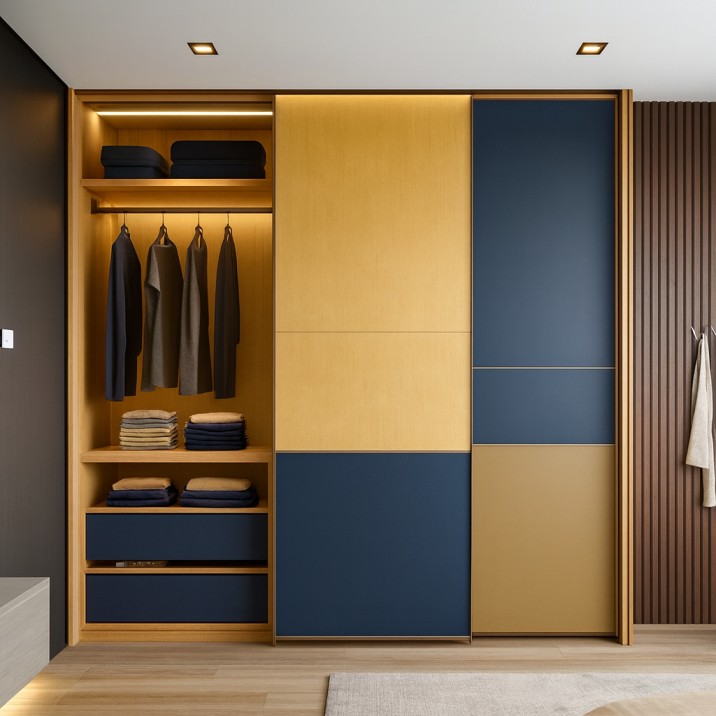
When space is extremely tight, a mandir can be built into one section of a tall storage unit, with shutters that open out into a small temple and close neatly when not in use. This is a brilliant solution for studio-style or compact 1 BHK flats, because the prayer space simply disappears into the furniture when you do not need it, yet it is fully functional with lighting and storage inside.
Doors, jaali and privacy
If you want to enclose the mandir, glass or wooden jaali doors are popular. They let light and the feel of the space flow out while still protecting the idols from dust. A jaali pattern also adds a traditional touch that suits a prayer area. For an open mandir, a simple decorative back panel does the job and keeps the look airy.
Easy maintenance matters
Since diyas, oil and camphor are used here, choose surfaces that are easy to wipe clean. A laminate or PU finish handles smoke marks better than delicate paint, and a small ledge or tray under the lamp area saves the main surface from oil stains. Good ventilation or a small exhaust nearby helps clear smoke so the wall above the mandir does not blacken over time.
Material and budget
Most pooja units are built in BWP or MR plywood with a laminate, veneer or PU finish, and sometimes a marble base for the platform. A simple wall-mounted or corner mandir usually costs between ₹15,000 and ₹45,000 depending on size and finish, while a fully enclosed pooja area with doors and storage costs more. We can build it as part of your full home interior or as a standalone unit, matched to the look of the rest of your home.
Frequently Asked Questions
Where should the mandir be placed in a flat as per vastu?
The north-east corner is the best direction for a mandir in a flat. Idols should face west or east so that you face east or west while praying. Avoid placing the mandir in the bedroom or facing the bathroom.
What is the best mandir design for a small flat?
For small flats, a wall-mounted mandir or a corner niche unit works best because it saves floor space. A compact unit with a shutter to hide items, soft lighting and a small storage drawer keeps the space neat and complete.
Can I have a pooja unit in the living room?
Yes, many flats place the mandir in the living or dining area when there is no separate room. A wall niche or a partition-style mandir in the north-east part of the living room is a common and vastu-friendly solution.
How much does a pooja unit cost in a flat?
A simple wall-mounted or corner mandir unit usually costs between ₹15,000 and ₹45,000 depending on size, material and finish. A full enclosed pooja area with doors and storage costs more.